
By Alamo City Urgent Care Team
Table of Contents
Key Takeaways
- Same-day walk-in clinics can evaluate and treat ear infections in both children and adults, giving families a faster alternative to the emergency room for non-life-threatening ear pain.
- Most ear infections follow a cold or allergy that traps fluid in the middle ear; recognizing warning signs like ear pain, fever, and ear-tugging in young children helps families act before symptoms worsen.
- A board-certified provider uses an otoscope to distinguish a bacterial infection from viral or referred pain, which determines whether antibiotics are truly needed or watchful waiting is appropriate.
- Alamo City Urgent Care offers walk-in ear infection evaluation at four San Antonio locations with on-site diagnostics, so most patients are in and out in under 30 minutes without an appointment.
Urgent care for ear infection refers to same-day, walk-in medical evaluation and treatment of ear pain, drainage, and infection symptoms at a clinic staffed by qualified providers, covering prompt diagnosis of otitis media and outer ear infections in children and adults. Ear infections are among the most common reasons families seek prompt care, and according to the Texas Department of State Health Services, three out of four children have at least one by age five. This guide covers the warning signs, when to seek treatment, how it compares in this urgent care or ER guide, and related conditions like sinus infections and ear, nose, and throat issues. This article is informational only, not professional medical advice.
What Is Urgent Care for an Ear Infection?
Urgent care for ear infection means walking into a medical clinic and getting same-day evaluation and treatment for ear pain, pressure, or drainage without an appointment or a lengthy emergency room stay. Why does this matter? Ear infections rarely resolve on your own schedule, and the discomfort, muffled hearing, and fever they bring can escalate quickly, especially in children. According to the National Institute on Deafness and Other Communication Disorders, an inflammation of the middle ear occurs when fluid builds up behind the eardrum. A trained provider can examine the ear and identify whether the pain is an earache or an infection, then recommend the right next step, because not every sore ear needs antibiotics. For San Antonio families weighing where to go, this walk-in model fills the gap between a primary care office that may be booked for days and a hospital emergency department reserved for life-threatening conditions. Clinics like Alamo City Urgent Care offer walk-in access, board-certified providers, and on-site tools to assess symptoms fast. If a lingering cold has turned into throbbing ear pain, understanding how a cold affects hearing can help you decide when to act. This information is educational only and is not professional medical advice; always consult a qualified clinician. Choosing a walk-in clinic can mean faster relief and a clearer path forward.

What Causes Ear Infections and Their Warning Signs?
Ear infections usually begin when a cold or allergy inflames the narrow tube connecting the middle ear to the throat, trapping fluid that can become infected. Watch for ear pain, tugging at the ears in young children, fever, drainage, muffled hearing, and unusual fussiness, all of which warrant prompt evaluation. According to the Texas Department of State Health Services, colds and allergies can lead to ear infections because the tube that connects the ear to the throat gets swollen, and fluid then builds up in the middle ear instead of draining out into the throat. This is why an infection so often follows a lingering upper respiratory infection or a seasonal allergy flare. When you seek urgent care for ear infection symptoms, a provider can distinguish a true middle ear infection from simple congestion or referred discomfort from a nearby condition such as strep throat. At Alamo City Urgent Care, we often see families arrive worried about a child who is crying, fussy, or pulling at one ear shortly after a cold. Texas DSHS notes that an affected child may cry, act fussy, or tug at the ears, and may also have a fever, diarrhea, or a runny nose. Adults more often describe a deep ache, a feeling of fullness, or reduced hearing on one side. Because trapped fluid can quietly affect hearing even without sharp pain, recognizing these early warning signs truly matters. Our board-certified providers deliver ear infection care across four San Antonio locations, including Brook Hollow in Northwest San Antonio, Shaenfield, and Marbach, so you can walk in without an appointment the moment symptoms appear. Serving San Antonio, TX, we work to have you evaluated quickly instead of waiting for hours elsewhere. If you notice worsening pain, a high fever, swelling behind the ear, or fluid draining from the canal, do not wait to have it examined.

- A recent cold, flu, or upper respiratory infection that leaves fluid trapped behind the eardrum
- Seasonal allergies or sinus congestion that swell the tube linking the ear and throat
- Ear pain or a sensation of pressure and fullness, sometimes worse when lying down
- In young children, tugging or pulling at one ear, unusual crying, and trouble sleeping
- Fever that may come with a runny nose or diarrhea
- Fluid or pus draining from the ear canal
- Muffled or reduced hearing on the affected side
- Dizziness, irritability, or a general sense of feeling unwell
A Quick Note on Ear Symptoms
- Severe ear pain, a high or persistent fever, a stiff neck, or swelling and redness behind the ear can point to a more serious problem and deserve immediate evaluation.
- This article is for general information only and is not a substitute for professional medical advice; a qualified provider should assess persistent or worsening ear symptoms.
Quick Facts
- 3 in 4 – children have at least one ear infection by age 5, per Texas DSHS
- ~10 days – typical window Texas DSHS suggests for a child's follow-up ear check
- 4 – Alamo City Urgent Care locations across San Antonio, including Brook Hollow, Shaenfield, and Marbach
- No appointment – needed to walk in for ear infection symptoms
How Does Urgent Care Treat an Ear Infection?
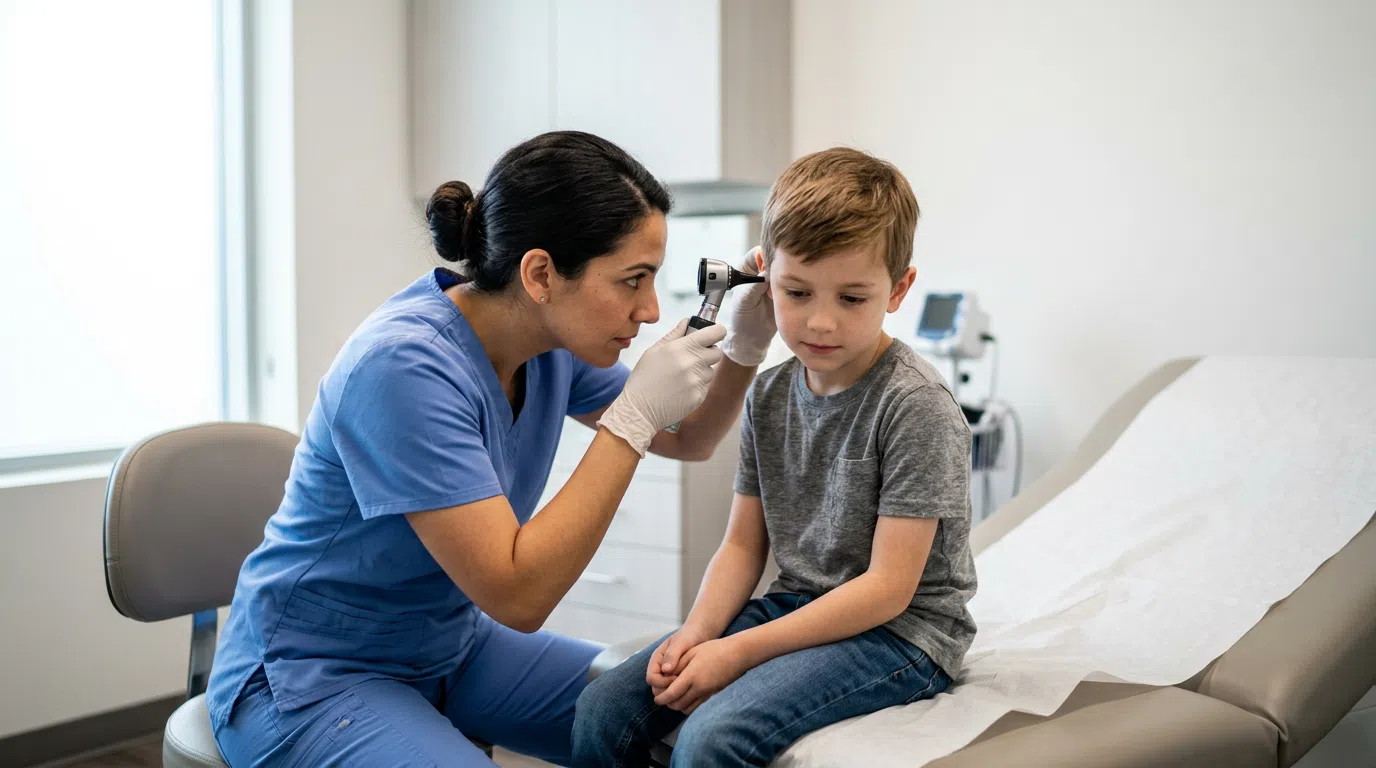
Urgent care for ear infection works through a simple, efficient sequence: a board-certified provider examines the ear, identifies whether the cause is bacterial or viral, and begins treatment during a single walk-in visit, no appointment required and no lengthy emergency room wait. The process starts the moment you check in. A clinician reviews your symptoms and medical history, then uses an otoscope, a small lighted instrument, to look inside the ear canal at the eardrum. A red, bulging, or fluid-filled eardrum often signals acute otitis media, the most common type of middle ear infection. Because our urgent care services are built for same-day evaluation, that examination usually happens within minutes rather than hours.
What makes this model effective is how much can be handled under one roof. If the provider needs more information, on-site imaging and diagnostics allow related concerns, such as a suspected respiratory infection or strep, to be tested during the same appointment. An ear infection usually begins when a cold or allergy causes the tube that connects the ear to the throat to swell, trapping fluid in the middle ear instead of letting it drain, as the Texas DSHS hearing program explains. Understanding that mechanism helps a provider decide whether an antibiotic is warranted or whether the infection is likely to clear on its own with supportive care.
From there, the provider builds a plan tailored to your situation: pain relief, ear drops, antibiotics when appropriate, and clear instructions on warning signs that require follow-up. Choosing a walk-in visit gives San Antonio families a middle path between waiting days for a primary care appointment and sitting in a crowded emergency department for a condition that is rarely life threatening. This article is informational only and is not a substitute for professional medical advice; always consult a qualified provider about your specific symptoms.
Why Is an Accurate Diagnosis Essential?
Accurate diagnosis is the most important step because ear pain does not always mean a bacterial infection that needs antibiotics. A provider distinguishes acute otitis media from swimmer's ear, simple fluid buildup, or pain referred from the throat or sinuses. Getting that distinction right prevents unnecessary antibiotic use and ensures the treatment actually targets the cause, which is why a hands-on otoscope exam anchors every visit.
How Should You Prepare for Your Visit?
Before you walk in, note when symptoms started, track any fever, and list current medications and allergies, since this history guides the exam. For children, who account for many ear infections, bring an updated immunization record if you have one. Alamo City Urgent Care welcomes walk-ins at every location, so families managing pediatric illnesses and injuries can arrive without an appointment and still be seen quickly.
When Ear Pain Needs Same-Day Care
Practical guidance on when to seek urgent care versus emergency care for ear pain.
- Sudden or worsening ear pain with fever or drainage should be evaluated the same day rather than waited out.
- Choosing a walk-in visit lets a provider confirm the cause and begin treatment before symptoms escalate.
- Seek emergency care instead if you notice a stiff neck, severe swelling behind the ear, or confusion.
What Are Your Ear Infection Treatment Options?
Choosing care for an ear infection usually comes down to a few paths: watchful waiting, oral antibiotics, ear tube surgery for recurrent cases, and a prompt in-person exam. The right option depends on age, symptom severity, and how long the discomfort has lasted, which is why an accurate diagnosis matters before any treatment begins. For mild symptoms, many providers recommend observation for a day or two, since the body often resolves the infection without medication. When pain is severe, persistent, or paired with a fever, antibiotics such as amoxicillin are frequently prescribed, and children with frequent, recurring infections may be evaluated for ear tubes. So where does urgent care for ear infection fit among these alternatives? A walk-in visit bridges the gap between waiting at home and a crowded emergency room, offering same-day evaluation, on-site diagnostic testing, and a clear treatment plan without an appointment. At Alamo City Urgent Care, board-certified providers can examine the ear, confirm whether a bacterial infection is present, and recommend the most appropriate path. For families weighing cost, flexible prepaid options can ease uncertainty about insurance coverage. Remember that this article is informational only and is not a substitute for professional medical advice, so always follow your provider's guidance. Whether you need reassurance or active treatment, a walk-in visit offers a fast, affordable middle ground.
|
Care Option |
Best Suited For |
Typical Course |
What the Evidence Shows |
|---|---|---|---|
|
Watchful waiting (observation) |
Mild earache without severe pain or high fever |
Reassess after 1 to 2 days |
Middle ear fluid usually clears within 3 to 6 weeks once the infection resolves, reported by the NIDCD |
|
Oral antibiotics (amoxicillin) |
Confirmed bacterial infection, especially under age 2 |
High-dose amoxicillin course |
High-dose amoxicillin is the U.S. mainstay and is most effective in children under two years, per StatPearls |
|
Ear (tympanostomy) tubes |
Frequent, recurring infections |
Outpatient surgery, effect studied over 2 years |
Averaged 1.47 infections per child versus 1.72 with oral antibiotics in an NIH-funded study |
|
Prompt in-person evaluation |
Uncertain diagnosis or worsening symptoms |
Same-day, walk-in exam |
The AAP advises prompt evaluation when ear pain is severe, persists beyond 48 hours, or is accompanied by fever, per HealthyChildren.org |
Ready for Fast Ear Infection Relief?
When an earache strikes, you can walk into any of our four San Antonio Alamo City Urgent Care locations without an appointment and be seen by a board-certified provider. With X-ray and labs on-site, most patients are in and out in under 30 minutes, so you can skip the ER wait. Stop by today or reserve your spot online.
Frequently Asked Questions About Ear Infections
Should you visit urgent care for an ear infection?
Urgent care for ear infection symptoms is a sensible option when pain flares after hours or your regular doctor has no same-day opening. A clinician can look inside the ear, identify whether it is a middle or outer ear infection, and begin appropriate treatment without an appointment. Walk-in clinics also evaluate related throat conditions like laryngitis when symptoms overlap.
What are the common symptoms of an ear infection?
Common signs include ear pain, a feeling of fullness or pressure, muffled hearing, and fluid draining from the ear. Children may tug at an ear, sleep poorly, or become unusually fussy, and a fever can accompany the infection. Because a young child cannot always describe discomfort, watch for behavior changes, as you would with other childhood illnesses like scarlet fever.
Do ear infections always require antibiotics?
No. Many mild middle ear infections improve on their own, and a clinician may recommend watchful waiting with pain relief before prescribing medication. Even so, the American Academy of Pediatrics notes that many mild ear infections resolve without antibiotics, and a provider decides whether a prescription is truly needed. A provider decides based on age, symptom severity, and how long symptoms have lasted.
When should you seek care right away?
Seek prompt attention if severe ear pain, a high fever, fluid or blood draining from the ear, or hearing loss develops, or if symptoms last more than a couple of days or keep worsening. Infants and very young children with a fever generally warrant faster evaluation. When you are unsure, urgent care for ear infection concerns offers same-day assessment.
Can adults get ear infections treated at urgent care?
Yes. While ear infections are more common in children, adults develop them too, often after a cold or respiratory infection. A clinician can examine the ear, suggest pain management, and prescribe antibiotics when they are truly needed, helping adults avoid a long wait for a primary care visit.